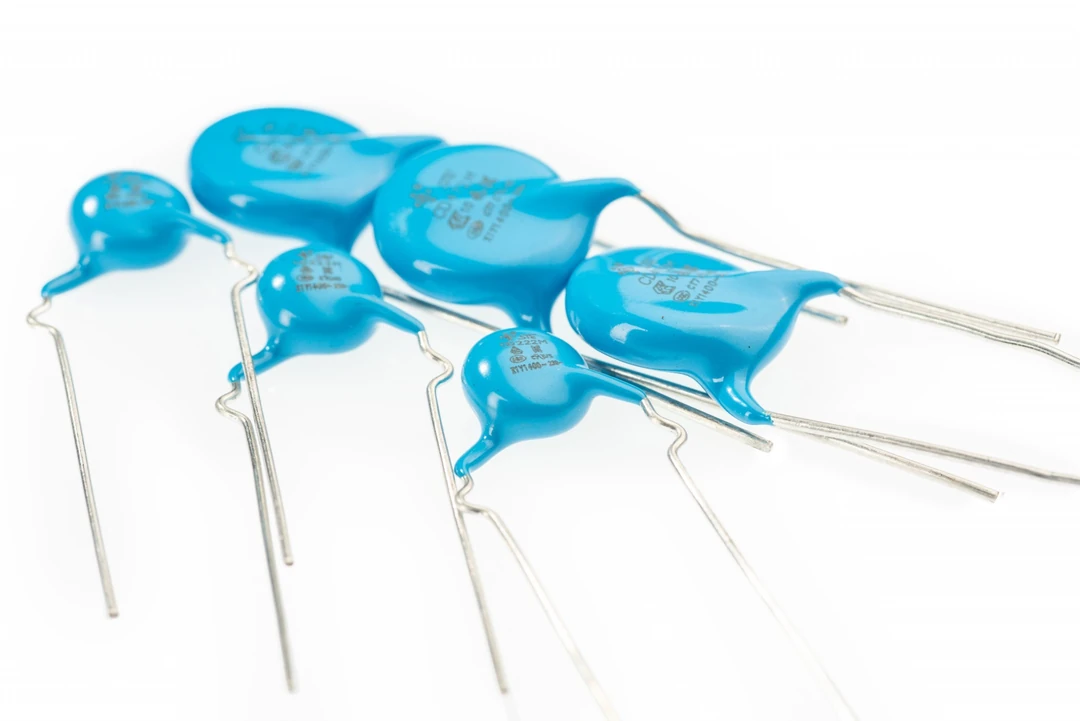
Ceramic capacitors: main types and applications
STE NEWS
An introduction to the main classes of ceramic capacitors and where they are commonly used.
Class 1 ceramic capacitors offer high stability and low losses for resonant circuits. Class 2 types offer high volumetric efficiency for buffering, bypass and coupling.
Ceramic capacitors use ceramic material as their dielectric. Selection starts with the circuit’s needs: stable resonant behavior and high capacitance in limited space place different demands on the material.
Class 1 and Class 2 dielectrics
| Class | Key characteristic | Typical use |
|---|---|---|
| Class 1 | High stability and low loss | Resonant circuits |
| Class 2 | High volumetric efficiency; capacitance is more sensitive to operating conditions | Buffering, bypass and coupling |
Temperature behavior and dielectric loss matter in resonant circuits. In bypass and coupling applications, assess usable capacitance at the intended voltage and temperature.
Check safety class separately
Dielectric classification is separate from X and Y safety classification. For a capacitor connected to the AC mains or across an insulation boundary, choose the safety class and approvals required by the connection and insulation design.
Explore ceramic capacitor series and their datasheets by voltage, capacitance and application. Ceramic capacitors
Images