STE Interview: Thirty Years of Materials, Automation and Specialist Manufacturing
Original report
STE edition
A full editorial adaptation of Chongdiantou’s STE interview, covering company history, ceramic materials, SMD development, automation and laboratory capability.
In July 2025, Chongdiantou visited STE to examine how a specialist component manufacturer had developed from a small workshop into a business combining materials research, component production and sales. Its feature includes a company-history narrative followed by an eleven-part interview with a STE executive identified in the original as Mr Zhao. This adaptation retains both parts and attributes historical figures, recognition and strategic assessments to that report.
From a small workshop to a manufacturing campus
The article opens with an old lead-forming machine displayed in the office of chairman Huang Ruinan. The machine represents successive stages of manufacturing development: the report recalls production rates progressing from 60 to 120 and then 240 pieces per minute.
The brand's early workshop in the summer of 1995 occupied only a few dozen square meters. The feature describes simple worktables made by Huang from recovered materials, a small team carrying out multiple jobs, and equipment running for long periods to build the business. Huang traveled frequently between Shantou and the Pearl River Delta, inspected products personally and sought feedback from customers.
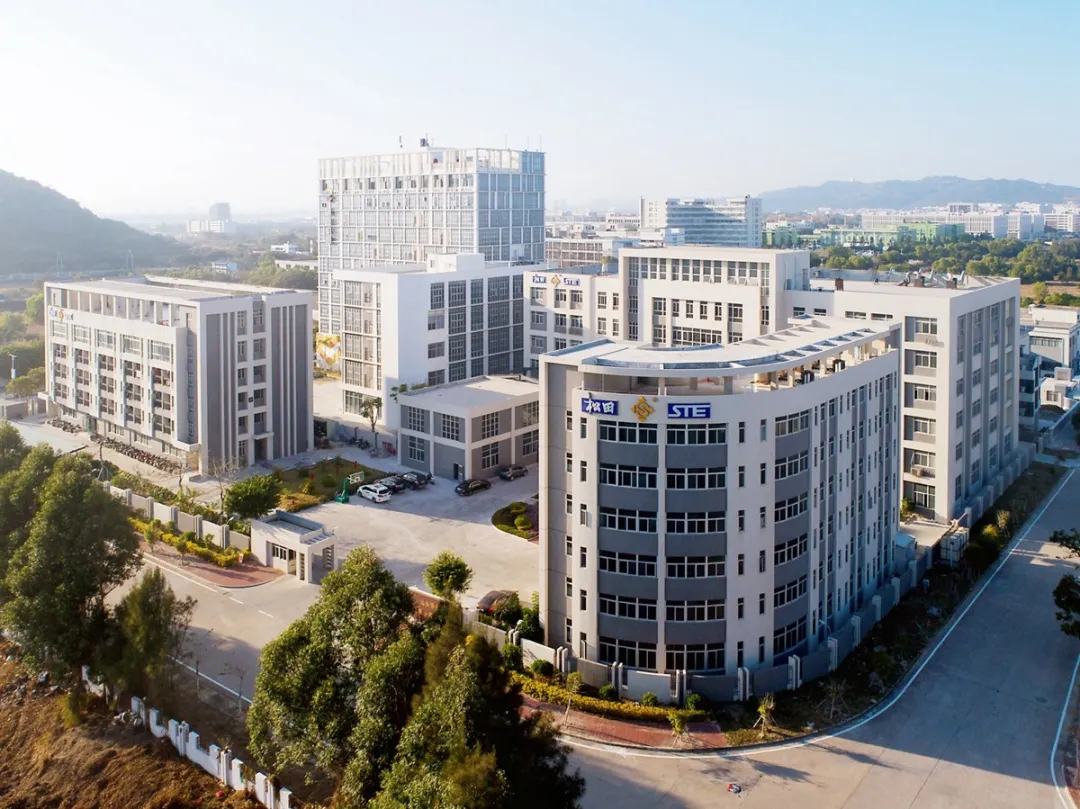
In 2005, the completion of Songtian Building gave the predecessor business a larger operating base. The article explains the name Songtian as an expression of Huang's ambition to benchmark the company against Panasonic and Murata. That naming story does not imply affiliation with either Japanese company.
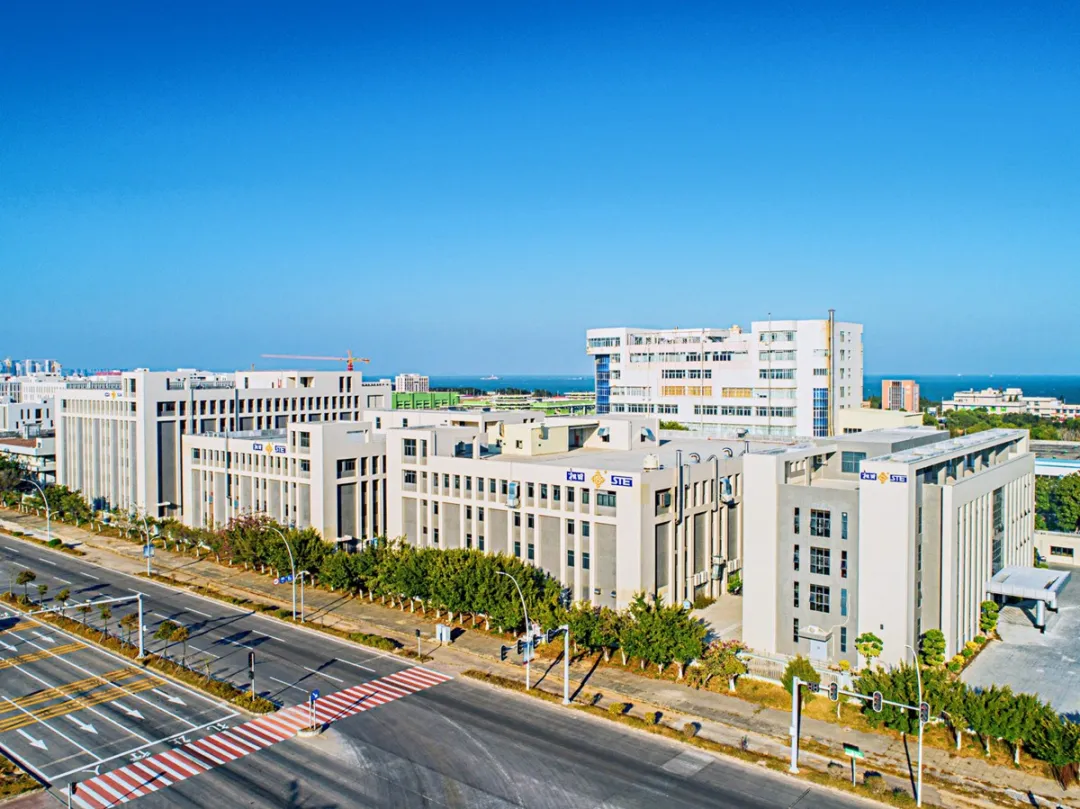
The feature then moves to the establishment of the Shantou bonded-zone company in 2012. As reported in July 2025, the site had five industrial buildings and a total floor area of 75,000 m². The 1995 brand origin and the 2012 legal-entity milestone refer to different stages of that history.
The report describes two laboratories recognized by UL and the establishment of a provincial engineering research center. It identifies 2019 as a further manufacturing milestone, when integrated automated production lines were introduced as part of a broader program of digitalization and automation. Successive east- and west-campus developments expanded the manufacturing base.
Other milestones named in the article include UL recognition for a 125°C varistor offering, ten consecutive years in the China Top 100 Electronic Components ranking, and provincial and national recognition under China's specialist-enterprise programs, including the national “Little Giant” designation. These are historical reporting statements; the dates and scope of individual certifications remain those of their underlying records.
Three areas highlighted by the feature
Materials and manufacturing processes
Chongdiantou presents ceramic formulation as a central part of STE's technical development. The feature describes the move from processing and manufacturing toward in-house development, production and sales, supported by investment in production and inspection equipment.
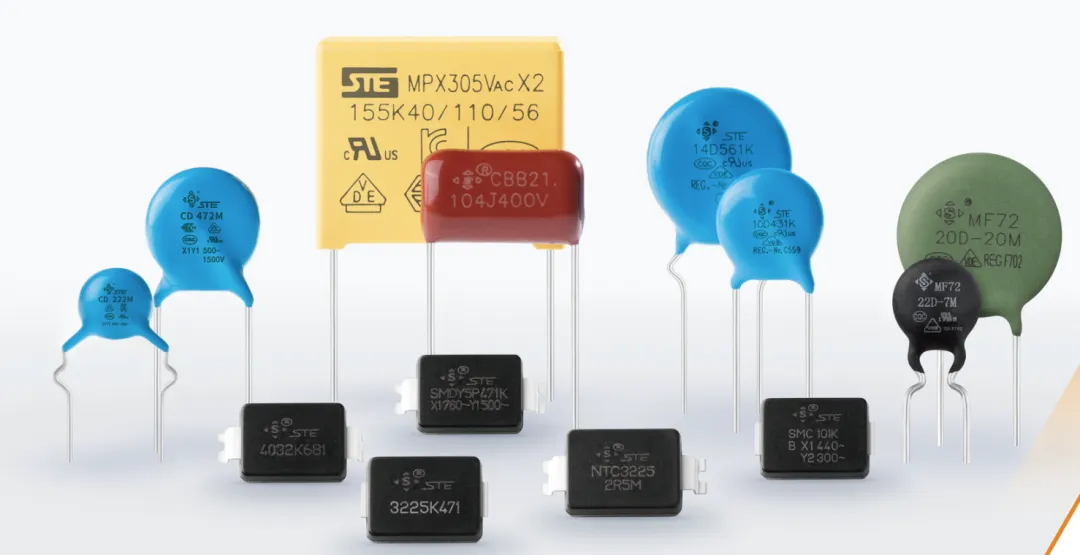
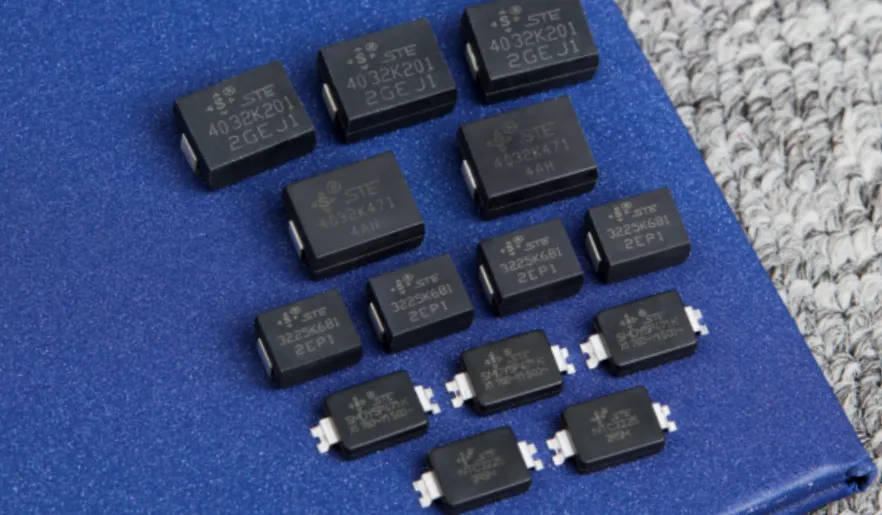
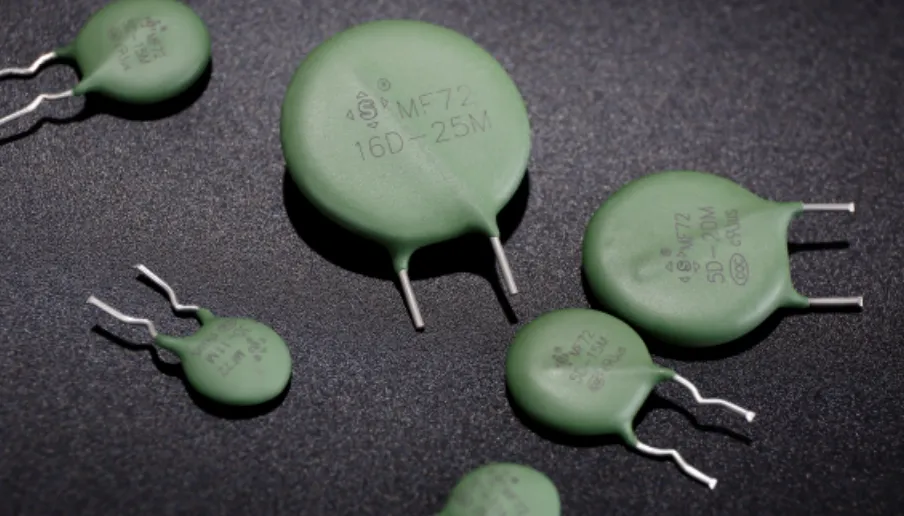
It also discusses magnetron sputtering and the use of copper electrodes. STE presents these as ways to control key manufacturing processes. The article links subsequent SMD development to demand for smaller components, standardized external dimensions and surface-mount production. It names ceramic capacitors, varistors and thermistors among the families offered in that format.
Automation is described as a manufacturing improvement with a corresponding demand for more capable personnel. The feature's argument is that sophisticated equipment, trained staff and process control must develop together. It does not provide a controlled before-and-after study of productivity or defect rates.
Standards and engagement with customers
The article describes STE's participation in IEC and Chinese GB standards work, together with national, provincial and municipal research projects. It mentions a China Patent Excellence Award and provincial or municipal patent and science-and-technology awards.
It also describes direct involvement with downstream companies' development work and participation in industry meetings and exhibitions. These activities are presented as ways to understand changing application requirements and inform product development.
Laboratories and research partnerships
The feature identifies UL and IEC-CB laboratory recognition as part of STE's ability to evaluate products for international markets. At the time of this July 2025 interview, the company was pursuing CNAS laboratory accreditation; the article does not report that process as already completed.
It further describes a doctoral expert workstation and a doctoral research practice base intended to connect academic research with manufacturing requirements. The feature frames those partnerships as another stage in STE's development. Its broader language about global leadership is a company ambition, rather than an independently established ranking.
The interview
The following questions and answers are professionally adapted from the written interview. Mr Zhao's responses remain attributed to him; they are not presented as independently audited findings.
1. How did STE define its direction when the business began?
Chongdiantou asked about the company's early differentiation and development.
Mr Zhao said the business initially concentrated on ceramic capacitors. Chairman Huang Ruinan looked to Panasonic and Murata as international benchmarks and used the name Songtian to express that ambition. Over the ensuing thirty years, he said, STE had pursued a focused specialist-development strategy built around research, innovation and component technology. He described the company as competitive within its chosen segments, with the aim of reaching international technical standards.
2. Which milestones most changed the company's direction?
The interview asked for strategically important stages in STE's development.
Mr Zhao identified three. First was the transition from a conventional manufacturing business to a technology company integrating development, production and sales, alongside national high-tech-enterprise recognition.
Second was investment in fully automated and digital production equipment, accompanied by the establishment of provincial and municipal resistor-capacitor and sensitive-component engineering research centers and a municipal enterprise technology center. He also cited UL laboratory recognition and IEC-CB laboratory recognition as support for product evaluation and growth.
Third was deeper cooperation between industry, universities and research institutions through the doctoral expert workstation and doctoral research practice base.
3. Which technical achievements best represent STE?
Chongdiantou asked which developments were most distinctive for the company and its industry.
Mr Zhao highlighted the use of magnetron sputtering to implement copper electrodes, describing STE as an early domestic adopter of that approach. He also said STE had brought surface-mount versions of its ceramic-based varistors, ceramic capacitors and thermistors into volume production.
Participation in IEC and GB standards work was another example. He described research-led innovation as the route from following existing products toward developing more of the company's own technology, within its longer-term ambition to build an internationally recognized component brand.
4. What supports STE's position in capacitors and resistors?
The question addressed core capabilities behind the company's specialist-enterprise recognition.
Mr Zhao divided his answer into two areas. The first was research: patented technologies, ceramic formulation design, production equipment and inspection instruments that support development and manufacturing.
The second was participation in industry development through national, industry and association standards, as well as national, provincial and municipal research projects. He cited the China Patent Excellence Award and regional patent and science-and-technology awards. His assessment of the company's competitive position was presented as STE's own view.
5. How does the company keep its technical work connected to market needs?
Chongdiantou asked about research leadership and market awareness.
Mr Zhao pointed to the research center, university and research partnerships, the doctoral expert workstation and the doctoral research practice base. He also described joining downstream companies' development activities and using conferences and exhibitions to follow changes in demand. The response links technical research with direct exposure to application requirements.
6. Can STE identify a specific research project?
The interview requested an example of a representative technical development.
Mr Zhao cited a 2021 major science-and-technology project on the research and industrialization of miniaturized varistors with higher withstand capability. He said that project generated three patent applications—one invention patent and two utility-model patents—and one published paper.
For the company as a whole, he reported 35 granted patents, including 11 invention patents, at the time of the interview. He described further innovation and invention-patent development as ongoing priorities. These are July 2025 figures, not a current patent inventory.
7. Why develop the SMD product range?
Chongdiantou asked what the new package format was intended to solve.
Mr Zhao described STE's SMD products as molded surface-mount components encompassing varistors, ceramic capacitors and thermistors. The development targets were miniaturization, standardized dimensions and compatibility with an increasingly surface-mounted assembly process.
He reported UL, VDE, TÜV and CQC approvals for products within the range and said shipments had reached volume scale. Applications named in his answer were power supplies, household appliances, electricity meters, new-energy equipment and energy-efficient lighting. Certification must be interpreted at the applicable part and certificate scope, rather than as a blanket approval of the complete portfolio.
8. What do laboratory recognitions contribute to international development?
The question concerned UL, IEC-CB and the certification requirements facing component suppliers.
Mr Zhao said those recognitions acknowledged STE's ability to evaluate products and supported its work toward international quality requirements. He also stated that, in 2025, the company was actively progressing toward CNAS laboratory accreditation.
That last point remains a statement about work in progress at the interview date. It has not been silently rewritten to reflect a later accreditation outcome.
9. How does automated digital equipment change production?
Chongdiantou asked about manufacturing across the reported 75,000 m² campus.
Mr Zhao said automated equipment reduced product transfer time and made production flow more smoothly. He also described reduced dependence on manual operations and less variability associated with those operations, supporting more consistent quality.
At the same time, he emphasized that advanced equipment requires staff with stronger technical skills. In his account, better equipment, greater automation and capable personnel are complementary requirements. The answer gives a manufacturing rationale without supplying quantified yield or productivity improvements.
10. What does a broad component offering provide to different industries?
The interview asked how STE's “one-stop” approach serves applications such as new-energy vehicles and power grids.
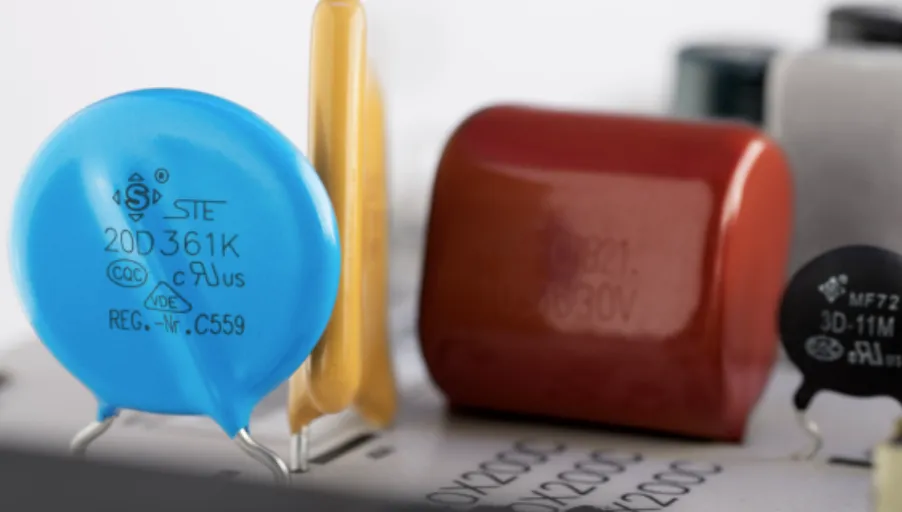
Mr Zhao said electronic equipment requires multiple types of components. STE's through-hole offering includes varistors, ceramic capacitors, metallized-film capacitors, thermistors and temperature sensors; the SMD offering includes varistors, ceramic capacitors and thermistors.
He described that variety as a way to offer more component choices and support across power supplies, industrial equipment, photovoltaic and new-energy applications, household appliances and lighting. He also identified new-energy and emerging fast-charging applications as areas for further development. His response did not name a specific joint customer project, and this adaptation does not infer one.
11. How does STE intend to compete internationally over the next three to five years?
The final question concerned differentiation and international ambitions.
Mr Zhao said STE intended to build on China's industrial capabilities while addressing global markets. He identified product diversity, cost and service as competitive considerations across several industries.
He concluded with a strategy centered on technical innovation, market requirements and customer satisfaction, supporting the ambition to create an internationally recognized electronic-component brand. The response set a direction rather than providing dated numerical targets or confirmed future milestones.
Figures and tables from the original report
The following figures retain their original captions, markings and historical context. Transcribed tables present the values shown in the published images; product selection should use the specifications for the selected part.